HCI Coursework · UX Design
Design for Access: YouTube ASL Translations
What if YouTube didn't just caption the world, but signed it, too?
The problem worth solving
Captions are not the same as inclusion.
Closed captions have long been treated as the accessibility solution for Deaf viewers online. But captions are an accommodation rooted in the hearing world, they translate spoken language into text without honoring the richness of Deaf communication. For the culturally Deaf community, American Sign Language (ASL) is not just an alternative to English; it is a distinct, living language tied to identity, history, and community.
Our team asked: what would it look like to build something that did not just make YouTube accessible, but made it genuinely inclusive? Something that gave Deaf users a real choice in how they experience content online?
What we were designing for
Before sketching a single wireframe, we grounded ourselves in values. Not every dimension needed redesigning, we identified what we wanted to actively push on versus what we'd acknowledge but set aside for this iteration.
Empowerment, voice and choice
Give Deaf users agency over how they watch, centering them as creators and consumers alike, not as edge cases to accommodate.
Cultural and historical values
Build something that respects the diversity of the Deaf community, across race, gender, and sign language backgrounds globally.
Access and safety
Already strong, this feature expands content access without being invasive. We kept it, but did not need to redesign it.
Areas we flagged, not fixed
Peer support, creator feedback loops, and interpreter vetting transparency, real gaps we acknowledged for future iterations.
From napkin sketch to hi-fi
Our design process moved through three distinct phases, and each one sharpened a different aspect of the feature.
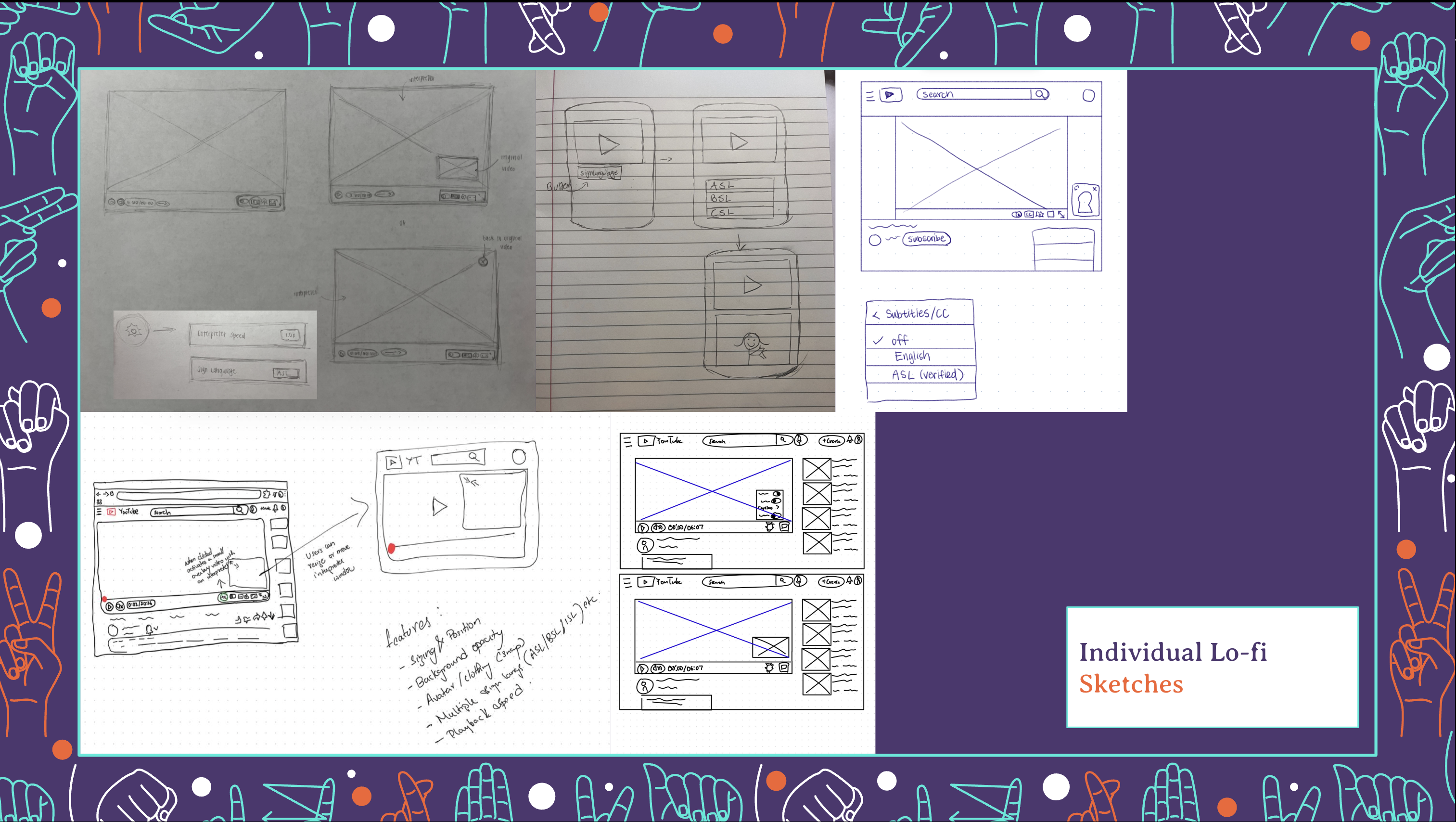
Individual lo-fi sketches
Each team member independently explored the UI, where does a sign language toggle live? Is it a pip window? A settings panel? Seeing five different interpretations of the same problem immediately surfaced the key tensions: visibility versus intrusiveness, flexibility versus simplicity.
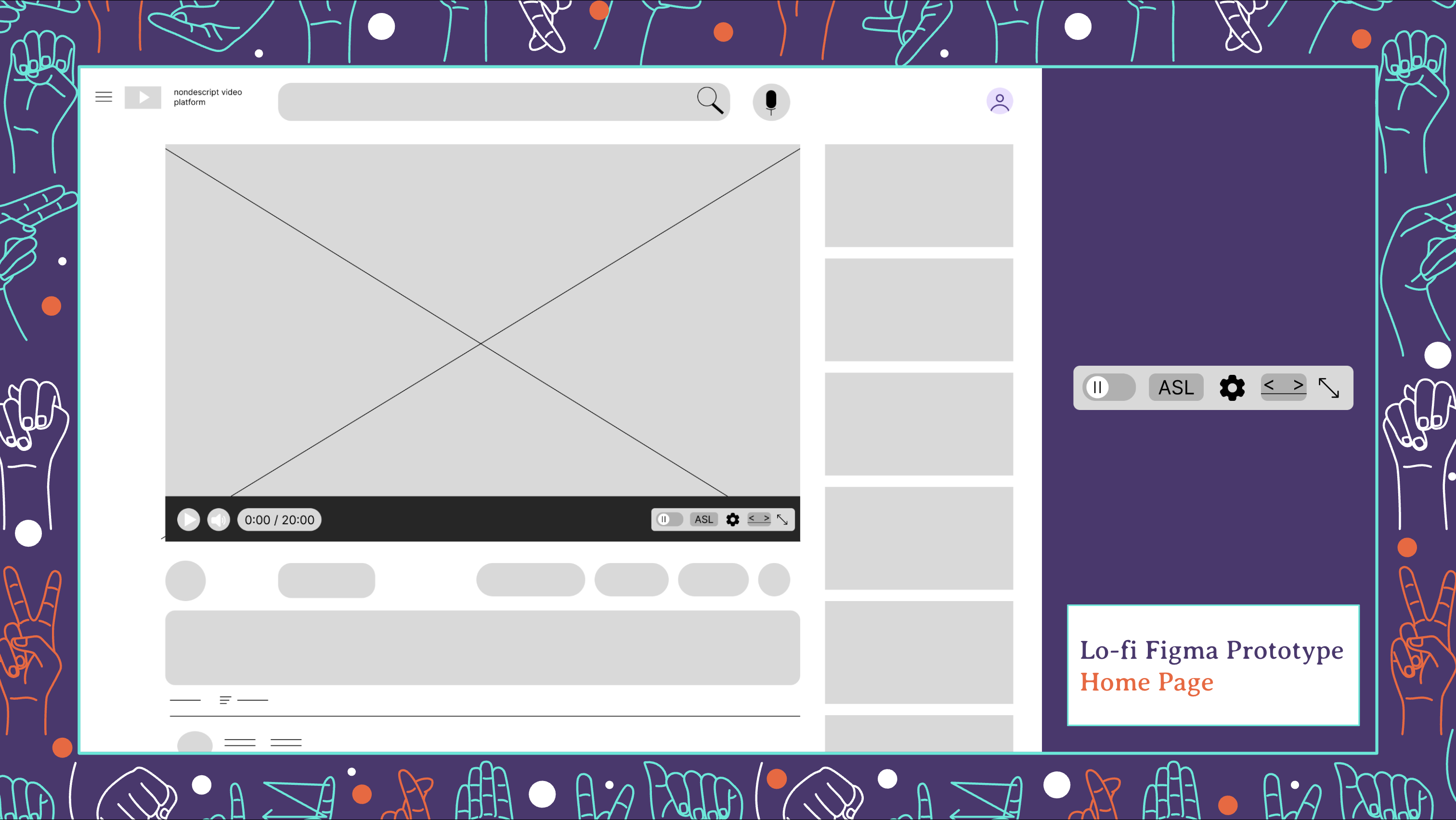
Collaborative lo-fi Figma prototype
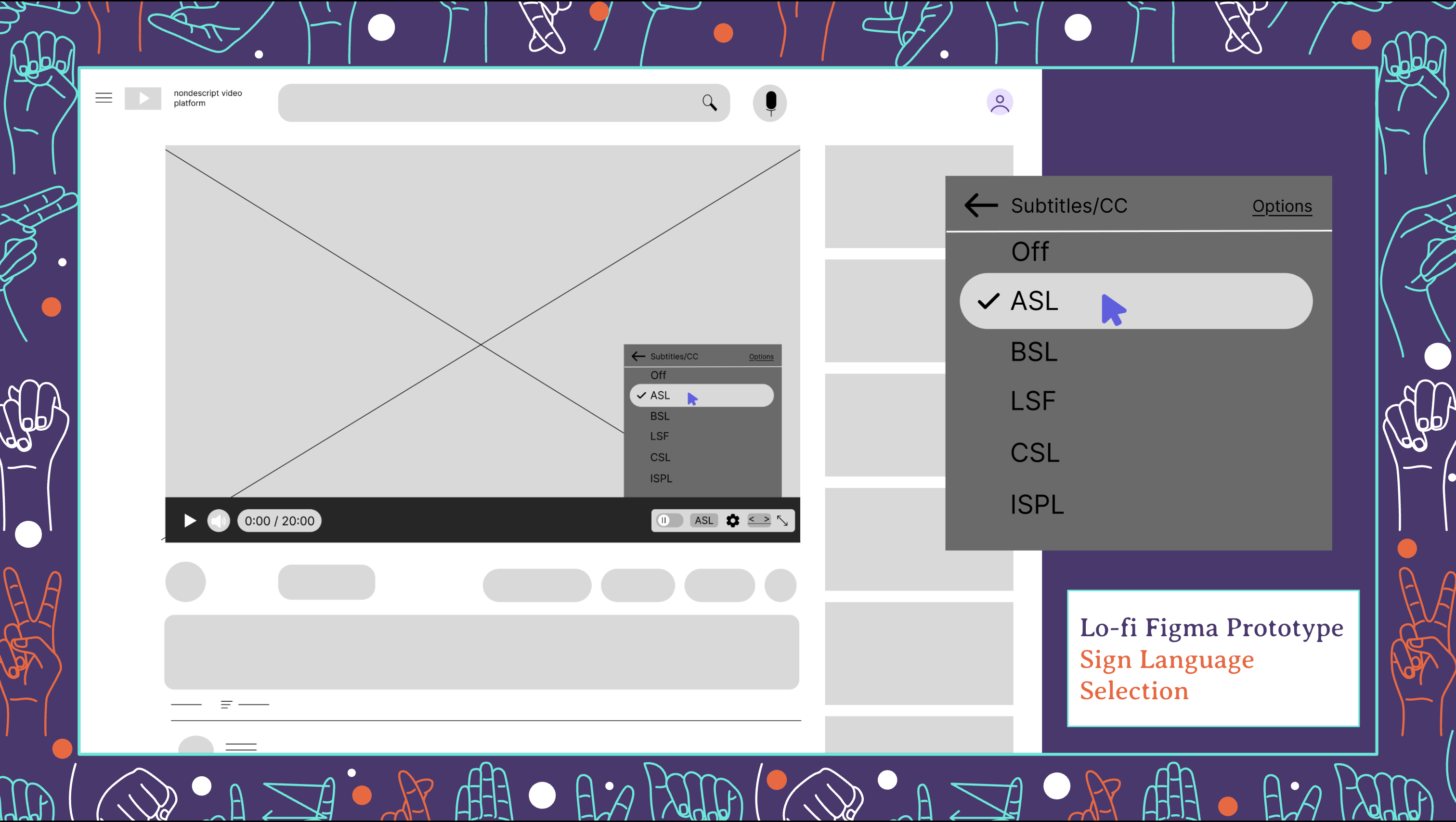
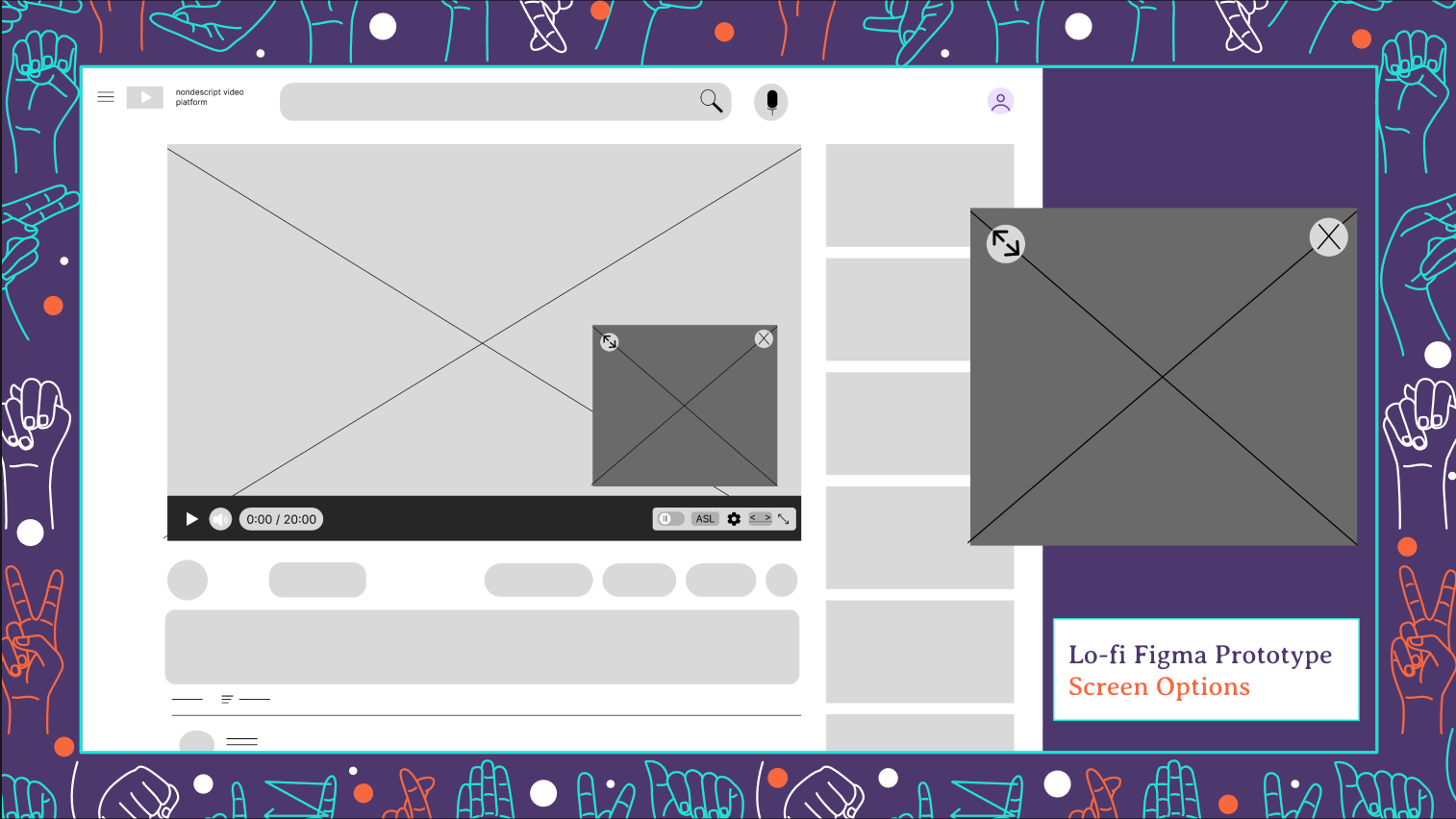
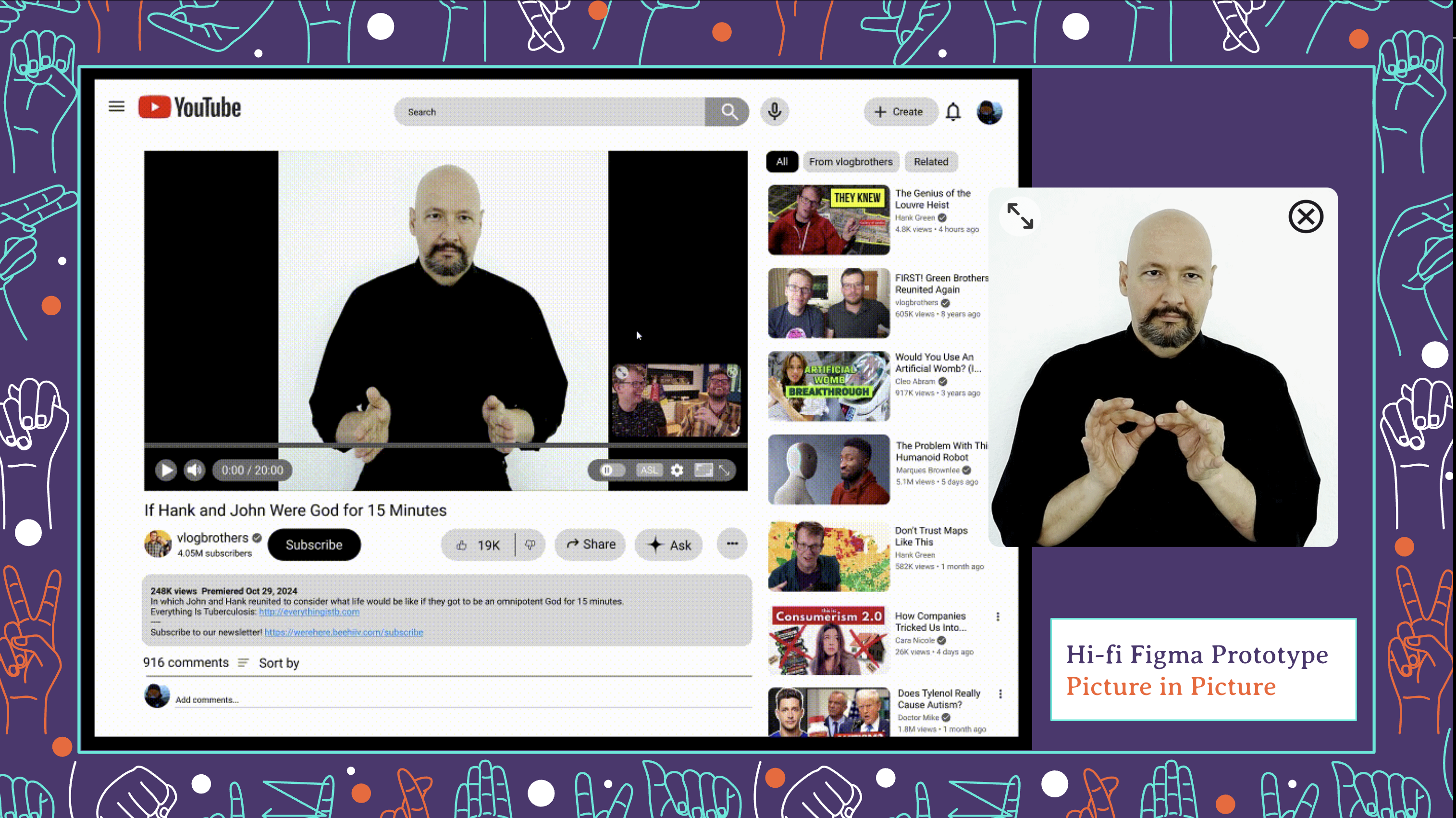
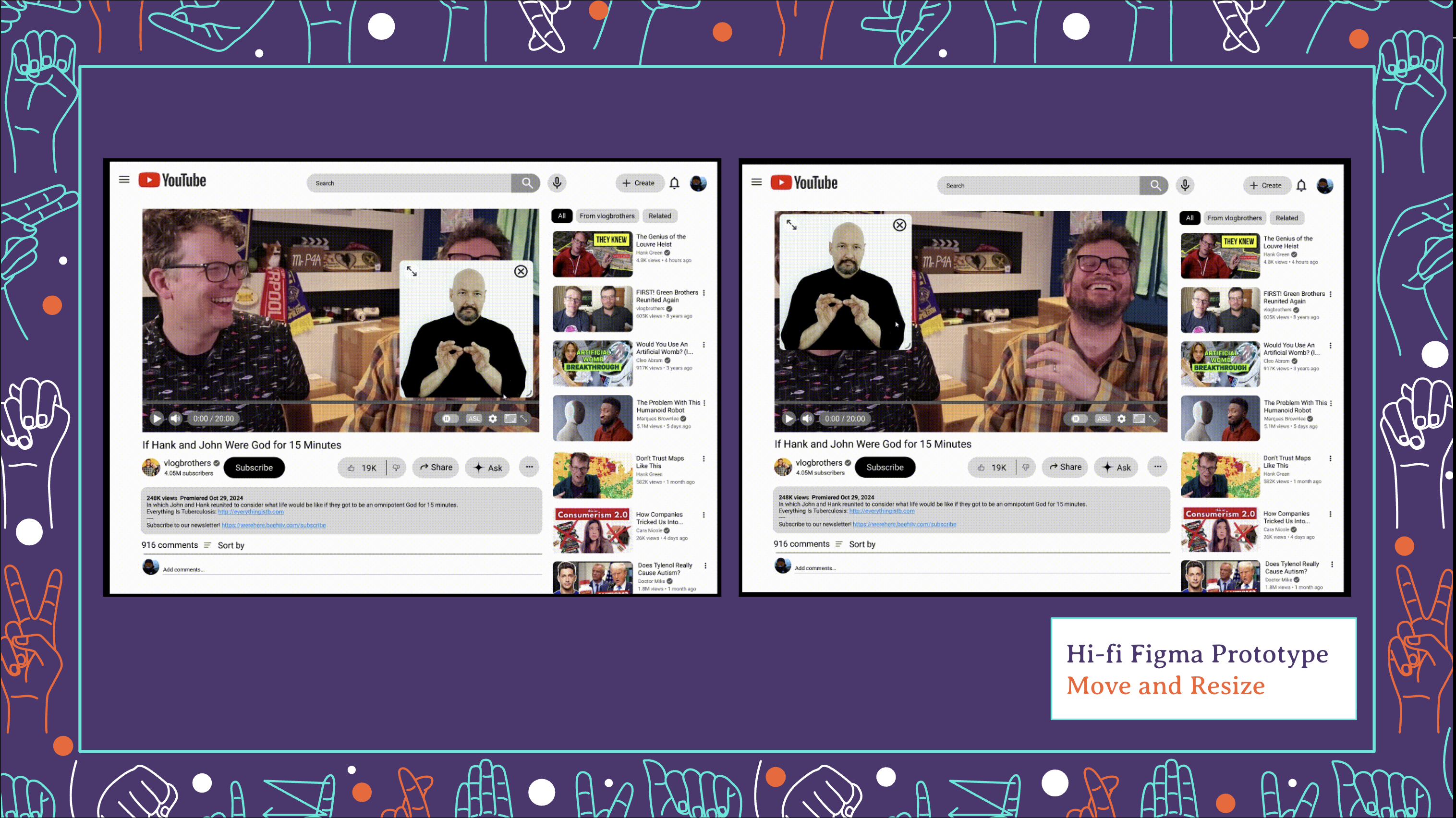
We converged on a concept: a lightweight control bar embedded in YouTube's existing player UI, with an ASL toggle surfaced directly alongside the CC button. A picture-in-picture interpreter window could be dragged and resized, giving users full control over placement without obscuring content.
Hi-fi Figma prototype
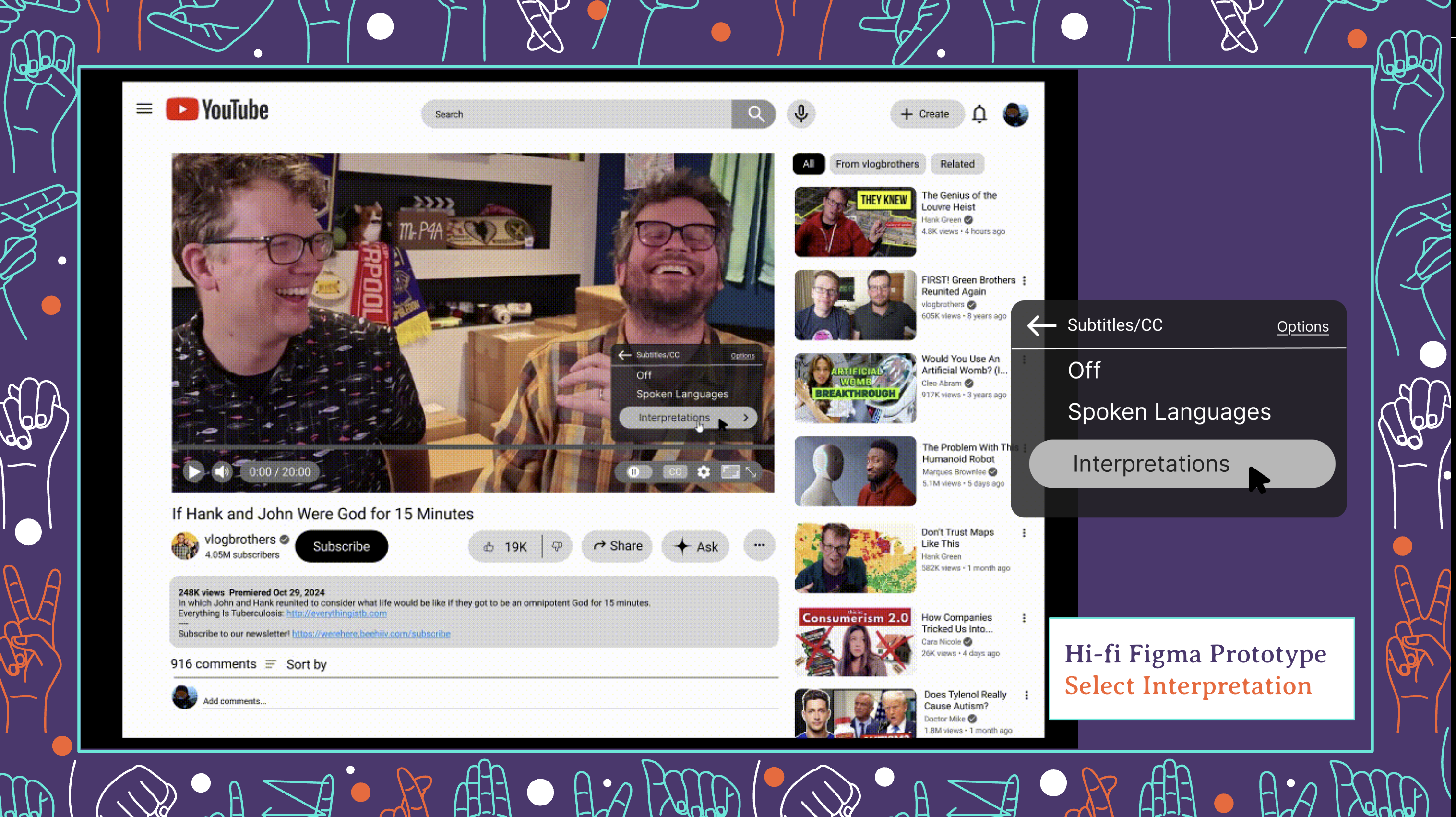
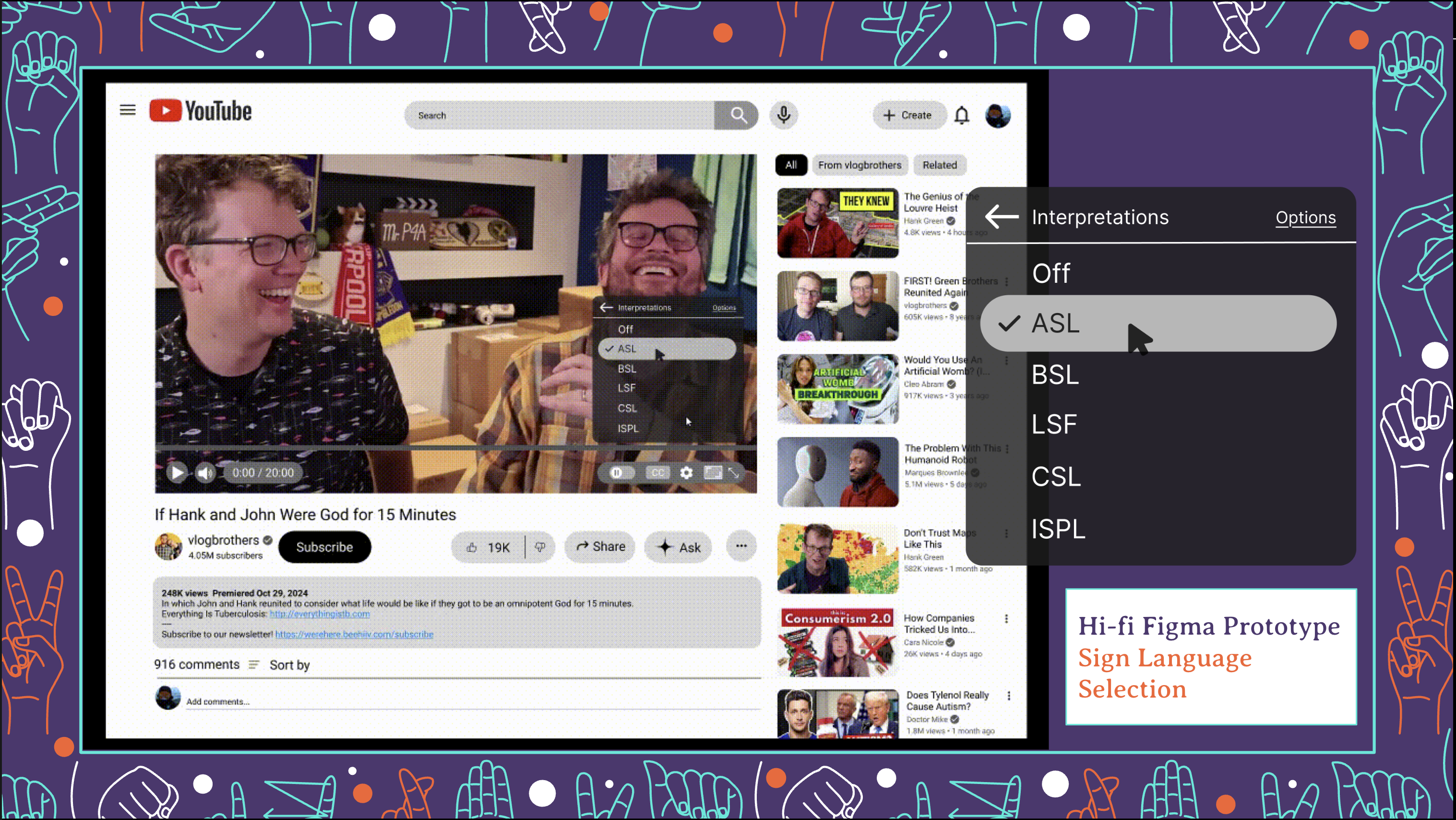
We rebuilt the prototype on a real YouTube page. The "Interpretations" sub-menu (nestled under Subtitles/CC) offered multiple sign languages, ASL, BSL, LSF, CSL, ISPL, making it clear this was not just an American feature. The pip window defaulted to the top-right corner but was fully movable and resizable.
The design decision I keep thinking about
One of our most deliberate choices was where to place the ASL option in the UI. Putting it under "Subtitles/CC" was intentional but also complicated, it signals that sign language is a form of captioning, which is not quite right culturally. We labeled it "Interpretations" as a sub-category to begin drawing that distinction, but it is a conversation that deserves more iteration.
It is a small detail that carries a lot of weight: how you categorize something shapes how people understand it. UI is never neutral.
What I took away
Accessible opens the door. Inclusive redesigns the building.
This project pushed me to think about the difference between accessible and inclusive. Accessible means the door is open. Inclusive means you were considered when the building was designed. For Deaf users on YouTube, captions are an open door, but this feature is about redesigning the building.
Working on a team with five people also reinforced how much richer design gets when you allow divergence before convergence. Our lo-fi sketches looked nothing alike, and that was the point. The best ideas in the final prototype came from friction between different mental models.
If I were to take this further, I'd want to explore community-submitted interpretations, letting Deaf creators themselves contribute ASL videos for existing content, building both a feedback loop and a platform for Deaf voices. That is the version that would feel truly mutual.
Back to Playground